

Vestibular Therapy vs Concussion Rehab Explained
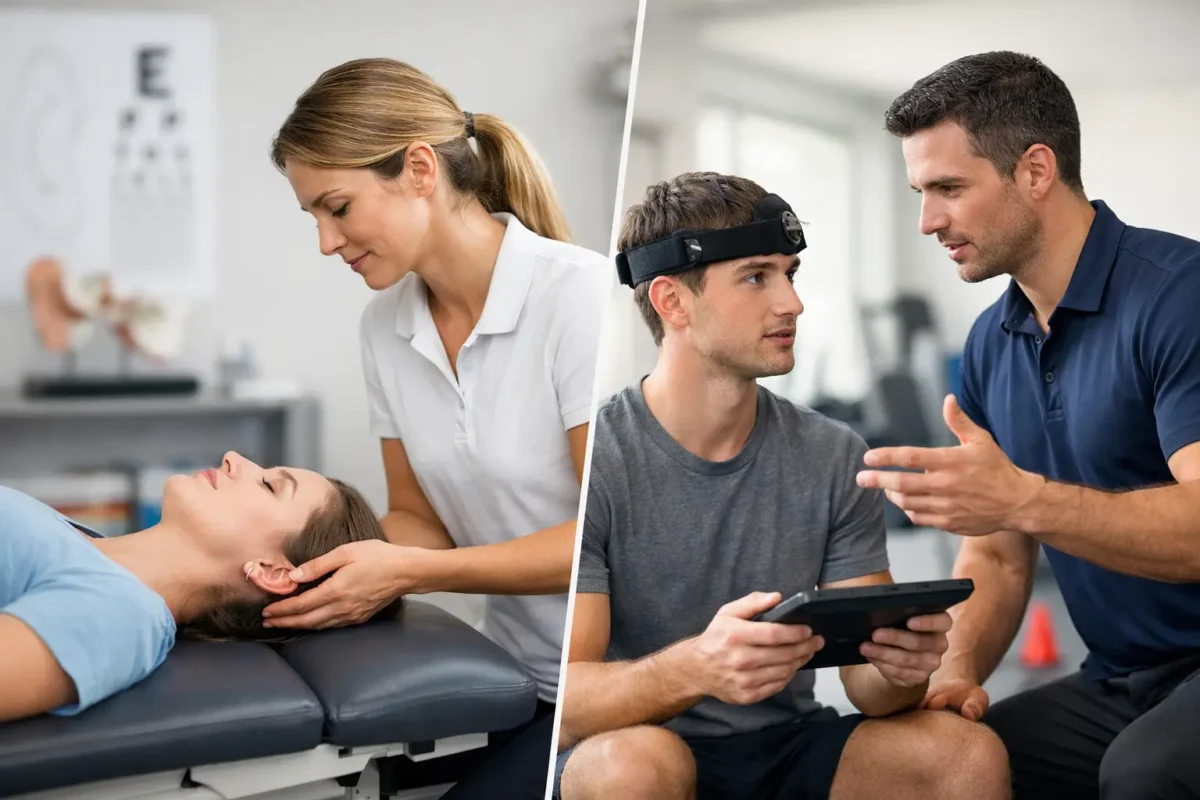
A busy grocery aisle, a bright computer screen, or a quick turn of the head should not leave you dizzy, nauseated, unsteady, or mentally drained. When these symptoms follow a head injury, the choice between vestibular therapy vs concussion rehab can feel unclear. The two approaches often overlap, but they are not interchangeable. Understanding the difference can help you get care that matches the symptoms affecting your work, family life, driving, and physical activity.
What Is Vestibular Therapy?
Vestibular therapy is a focused form of physiotherapy for problems involving the vestibular system – the inner-ear and brain pathways that help control balance, gaze stability, orientation, and movement. When this system is not processing information properly, a person may feel as though the room is spinning, the floor is moving, or their vision cannot keep up with head movement.
Vestibular concerns do not always result from a concussion. They may occur with benign paroxysmal positional vertigo (BPPV), vestibular neuritis, age-related balance changes, migraines, inner-ear conditions, or certain medication effects. A thorough assessment matters because dizziness is a symptom, not a diagnosis.
A vestibular physiotherapist assesses how your eyes, head, body, and balance system work together. Treatment may include guided head and eye movements, gaze-stabilization exercises, balance retraining, walking drills, positional treatment for BPPV, and gradual exposure to movements or environments that trigger symptoms. The goal is not to push through severe dizziness. It is to help the nervous system adapt safely and improve confidence with everyday movement.
What Is Concussion Rehabilitation?
Concussion rehabilitation is broader. It addresses the range of symptoms that can follow a concussion or mild traumatic brain injury, whether the injury happened in a motor vehicle collision, at work, during sport, or after a fall. A concussion can affect more than balance. It may also change concentration, sleep, mood, vision, neck function, exercise tolerance, and sensitivity to light, sound, or busy environments.
A well-planned concussion rehabilitation program starts with a detailed assessment of the person’s symptoms, injury history, daily demands, and recovery barriers. Some patients need support returning to computer-based work. Others need help tolerating driving, caring for children, or returning to a physical job. The treatment plan should reflect those real-life requirements.
Concussion care may include education about pacing and symptom management, graded aerobic exercise, cervical spine treatment, visual and vestibular assessment, balance work, and a staged return to work, school, sport, or regular activity. Depending on the presentation, coordinated care from other regulated healthcare professionals may also be appropriate.
Vestibular Therapy vs Concussion Rehab: The Main Difference
The simplest distinction is scope. Vestibular therapy treats dysfunction related to dizziness, balance, visual motion sensitivity, and movement tolerance. Concussion rehabilitation addresses the wider effects of a brain injury and may include vestibular therapy as one part of a larger plan.
For example, someone who experiences brief spinning when rolling over in bed may need positional vestibular treatment, even if they have never had a concussion. In contrast, someone recovering from a collision may have dizziness along with headaches, neck pain, fatigue, poor concentration, and difficulty in bright or noisy settings. Vestibular exercises could be helpful for that person, but they may also need neck treatment, activity pacing, and a gradual return-to-work strategy.
This is why a generic exercise sheet is rarely enough. The same head movement that is appropriate for one patient may be too provocative, too easy, or directed at the wrong problem for another. Individualized assessment allows treatment to target the systems actually contributing to symptoms.
When Vestibular Therapy Is Part of Concussion Care
Vestibular symptoms are common after concussion. You may notice that your eyes struggle to stay focused while walking, that stores and crowds feel overwhelming, or that turning quickly brings on nausea or imbalance. These symptoms can occur because the brain is having difficulty integrating visual, inner-ear, and body-position information after the injury.
In this situation, vestibular therapy can be a valuable component of concussion rehabilitation. A physiotherapist may prescribe carefully selected exercises to improve gaze control, reduce motion sensitivity, restore balance, and build tolerance for the movements required in daily life. The exercises are progressed based on your response, not simply on a calendar.
However, dizziness after a concussion is not always vestibular in origin. It can also be influenced by neck injury, migraine, visual problems, medication effects, anxiety, poor sleep, or reduced activity tolerance. Addressing only one possible cause may slow recovery. A broader concussion assessment helps determine whether vestibular therapy should be the main focus, one part of treatment, or supplemented by other care.
Symptoms That Help Guide the Treatment Plan
Certain symptoms can suggest that vestibular assessment should be included. These include spinning or rocking sensations, unsteadiness while walking, nausea with head movement, blurred vision during movement, and discomfort in visually busy spaces such as malls or transit stations.
Other symptoms point to the need for a more comprehensive concussion rehabilitation plan. Persistent headaches, neck pain, fatigue, brain fog, sleep disruption, mood changes, exercise intolerance, and difficulty managing work or school demands all deserve attention. Many patients experience a combination of both groups of symptoms.
The severity of symptoms does not always show the full picture. A person may appear well during a short appointment but struggle after an hour at a screen or a commute home. Tracking when symptoms start, what aggravates them, how long they last, and what helps them settle can give your clinician useful information for planning care.
Why Timing and Progression Matter
Complete rest for long periods is not usually the goal of modern concussion care. After an initial period of relative rest and medical guidance, many people benefit from a gradual, symptom-guided return to physical and cognitive activity. Doing too much too soon can flare symptoms, but avoiding all activity for too long can reduce confidence and physical tolerance.
Vestibular rehabilitation follows a similar principle. Exercises may cause mild, temporary symptoms because they challenge the balance system, but they should be prescribed at a manageable dose. Severe or prolonged symptom flare-ups are a sign that the program may need adjustment.
Progress is rarely perfectly linear. A demanding workday, poor sleep, a migraine, or a busy family weekend can temporarily increase symptoms. This does not necessarily mean recovery has stopped. It does mean the treatment plan should be flexible, with realistic pacing and measurable goals.
The Role of Neck Treatment in Post-Concussion Dizziness
Head injuries often occur alongside strain to the neck, particularly after a motor vehicle collision. The neck contributes important position information to the brain, so pain, stiffness, weakness, or altered movement can contribute to headaches, dizziness, and a sense of imbalance.
For some patients, hands-on physiotherapy, mobility work, strengthening, and posture or movement retraining are important parts of concussion rehabilitation. Treating the neck does not replace vestibular therapy when vestibular dysfunction is present. Instead, it can address another factor that may be maintaining symptoms.
This is one reason an integrated physiotherapy assessment is useful. At Churchill Physiotherapy Clinic, care can be planned around the full presentation rather than treating dizziness, pain, and activity limitations as unrelated problems.
When to Seek Medical Attention Promptly
Any suspected concussion should be assessed by an appropriate healthcare professional, especially after a significant impact, collision, or fall. Seek urgent medical attention for worsening or severe headache, repeated vomiting, increasing confusion, fainting, seizures, weakness or numbness, slurred speech, unusual behaviour, or difficulty staying awake.
Even when symptoms seem mild, timely assessment is worthwhile if dizziness, headaches, visual changes, or concentration problems are interfering with daily function. Early guidance can help you avoid both overexertion and unnecessary withdrawal from normal life.
Choosing the Right Starting Point
You do not need to decide on your own whether your symptoms are strictly vestibular or concussion-related. The right starting point is a careful assessment that considers the injury, the symptom pattern, your medical history, and the activities you need to return to.
If dizziness is your main concern, vestibular therapy may be the clearest path forward. If dizziness appears alongside broader post-concussion symptoms, a concussion rehabilitation plan that includes vestibular treatment may be more appropriate. In either case, recovery should feel structured, monitored, and tailored to your tolerance.
The next meaningful step is not to force a return to normal or wait indefinitely for symptoms to disappear. It is to identify what is limiting you now and begin a safe, individualized plan to restore steady movement, clearer function, and confidence in daily life.