

Your Guide to Postpartum Core Recovery After Birth
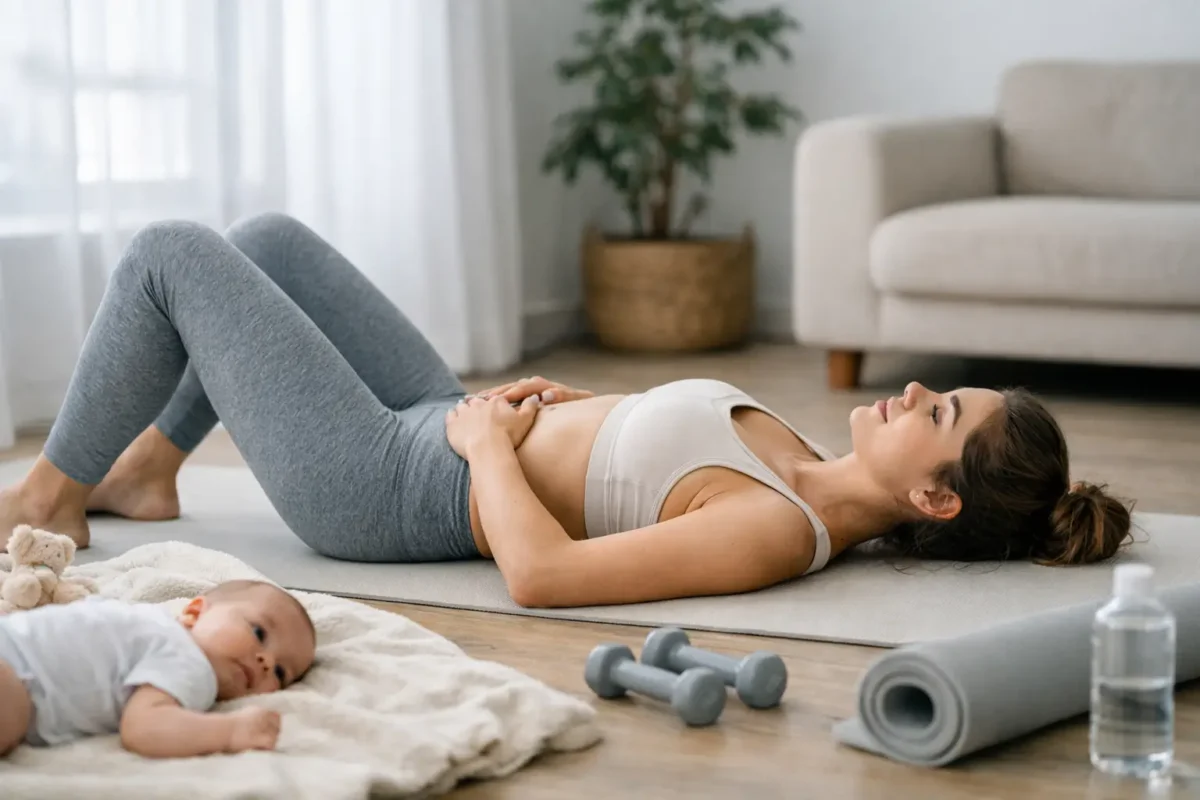
Your core may feel unfamiliar after pregnancy, whether you gave birth a few weeks ago or several months ago. A guide to postpartum core recovery should begin with that reality: recovery is not about rushing back to planks, shrinking your waist, or meeting an arbitrary fitness deadline. It is about restoring the coordination, strength, comfort, and confidence you need for lifting your baby, returning to work, walking, exercising, and moving through daily life without symptoms.
Pregnancy changes more than the appearance of the abdomen. Your abdominal wall lengthens, your breathing mechanics adapt, your posture shifts, and your pelvic floor carries increased load. Labour, vaginal delivery, caesarean delivery, sleep disruption, and the demands of newborn care can add further strain. A gradual, individualized approach gives these systems time and guidance to work together again.
What Postpartum Core Recovery Really Means
The core is not one muscle and it is not defined by visible abdominal tone. It is a coordinated system that includes the diaphragm, deep abdominal muscles, back muscles, hips, and pelvic floor. These areas help manage pressure in the abdomen and provide support during everyday movements such as standing up, carrying a car seat, coughing, or climbing stairs.
After birth, some people notice abdominal weakness or separation, back or pelvic pain, leaking with coughing or exercise, heaviness in the pelvis, or difficulty returning to activities they previously enjoyed. These symptoms are common, but they should not simply be accepted as the price of motherhood. They can often improve with appropriate assessment and rehabilitation.
A strong recovery plan focuses on function first. For one person, that may mean getting up from bed without pain. For another, it may mean returning to running, strength training, or a physically demanding job. The right starting point depends on your delivery, healing, symptoms, activity goals, and medical history.
Start With Breathing and Pressure Control
Many people instinctively grip their stomach or hold their breath when trying to “engage the core.” Postpartum, that strategy can increase downward pressure on the pelvic floor and create more tension than support. The first step is often learning to breathe with the body rather than brace against it.
Try a relaxed breath in through the nose, allowing the rib cage and abdomen to expand gently. As you exhale, imagine your lower abdomen softly drawing inward and your pelvic floor lifting lightly. The effort should feel controlled, not forceful. If you feel pelvic pressure, pain, breath-holding, or tightening in your neck and shoulders, reduce the effort.
This type of breathing can be practised while feeding your baby, lying down, sitting, or standing. It may sound simple, but it builds awareness of how the diaphragm, abdominal wall, and pelvic floor work together. That coordination becomes the foundation for more demanding exercise.
Rebuild Strength Before Adding Intensity
Once breathing and gentle activation feel comfortable, strength work can be introduced gradually. Early exercises may include pelvic tilts, heel slides, supported bridges, side-lying hip work, and controlled sit-to-stand movements. The best exercise is not necessarily the most difficult one. It is the one you can perform with good control and without worsening symptoms.
As capacity improves, you can progress to loaded squats, carries, rows, step-ups, modified planks, and other functional movements. The pace matters. If an exercise causes abdominal doming, persistent pain, urine leakage, pelvic heaviness, or a feeling that you cannot control the movement, it may be too challenging for your current stage.
There is no universal week-by-week schedule. Some people feel ready for more movement early in recovery, while others need more time because of a caesarean section, perineal tearing, pelvic floor symptoms, sleep deprivation, or other health concerns. Progress should be based on how your body responds, not on comparison with someone else’s postpartum timeline.
Returning to Running, Impact, and Heavier Lifting
Running, jumping, and high-intensity exercise place greater demands on the pelvic floor and core. Before returning to impact, it helps to be able to walk comfortably, perform repeated sit-to-stands and single-leg movements with control, and complete light strength exercises without symptoms during or after activity.
Heavier lifting also deserves preparation, especially for parents returning to physical work or regularly carrying a growing child. Exhale through the effort instead of holding your breath, keep the load close to your body, and build volume gradually. Feeling generally tired after exercise is different from developing pain, bulging, leaking, or pelvic pressure that lingers into the next day.
Understanding Diastasis Recti Without Fear
Diastasis recti is a widening of the connective tissue between the rectus abdominis muscles. It is a normal adaptation during pregnancy and is extremely common after birth. The width of the gap alone does not determine whether someone is strong or weak, and it does not automatically require a specific exercise program or surgery.
More useful questions include whether the abdominal wall can generate tension, whether you experience doming or discomfort with movement, and whether you can manage daily activities confidently. A person can have a remaining gap and still have excellent core function. Conversely, a narrow gap does not guarantee that pelvic floor, breathing, or load-management concerns have resolved.
Exercises that create visible doming or strain may need to be modified temporarily, but avoiding all abdominal exercise is rarely the answer. Progressive, well-taught strengthening helps the abdominal wall adapt to load. A pelvic floor physiotherapist can assess how your core behaves during real movements rather than relying on a single measurement.
Caesarean Birth Requires Its Own Considerations
A caesarean birth involves abdominal surgery, so recovery includes both postpartum rehabilitation and surgical healing. Early on, comfortable walking, gentle breathing, circulation exercises, and supported movement are often appropriate, following your medical team’s advice. Rolling onto your side before sitting up and using a pillow for light support when coughing can make movement more comfortable.
As the incision heals, some people experience tightness, numbness, pulling, or sensitivity around the scar. Scar mobility and abdominal strengthening can be addressed gradually by a qualified clinician once healing is appropriate. Do not force stretching or massage over an unhealed incision, and seek medical advice if the area becomes increasingly red, hot, swollen, draining, or painful.
When to Seek Postpartum Physiotherapy
A postpartum assessment is useful even if you are not in significant pain, particularly if you want to return to running, sport, lifting, or demanding work. Pelvic floor physiotherapy provides an individualized review of breathing patterns, abdominal wall function, pelvic floor coordination, posture, mobility, and movement goals. Treatment may include hands-on care, education, graded exercise, and practical strategies for daily tasks.
Book an assessment sooner if you experience any of the following:
- Urine or stool leakage, painful intercourse, or difficulty emptying the bladder or bowel
- Pelvic heaviness, pressure, or a sensation of bulging
- Ongoing low back, hip, pelvic, abdominal, or scar pain
- Abdominal doming or weakness that limits daily activity or exercise
- Symptoms that increase when you walk, lift, cough, or return to impact activity
Urgent symptoms such as heavy bleeding, chest pain, shortness of breath, fever, severe headache, calf swelling, or sudden worsening pain need prompt medical attention rather than an exercise-based solution.
Make Recovery Fit Real Life
The most effective postpartum program is one you can carry out while caring for a baby and managing limited rest. A few focused minutes of breathing and strength work several times a week can be more sustainable than an ambitious plan that adds pressure to an already demanding season.
Pay attention to the movements you repeat most: feeding posture, lifting from the floor, carrying a baby on one hip, pushing a stroller, and getting in and out of the car. Small adjustments in positioning, load, and breathing can reduce strain throughout the day. Recovery is built through these repeated moments as much as through formal exercise.
At Churchill Physiotherapy Clinic, pelvic floor physiotherapy can help Mississauga patients move beyond generic postpartum advice with a plan based on their symptoms, healing stage, and personal goals. You deserve care that treats your postpartum body as capable, changing, and worthy of professional support.
The goal is not to prove that you can push through discomfort. It is to rebuild trust in your body, one well-supported movement at a time.