

Car Accident Physiotherapy in Mississauga: Why Early Treatment Matters
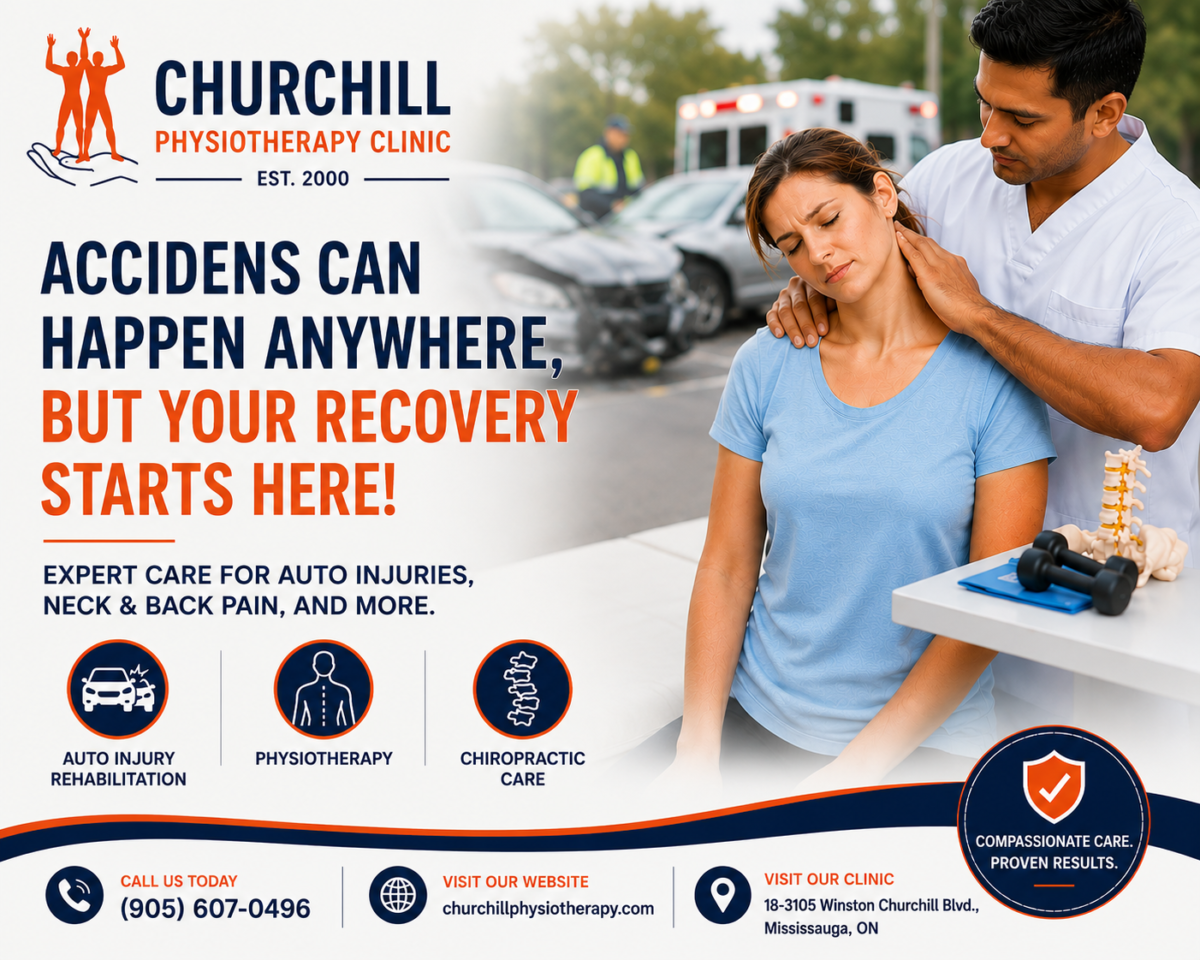
Car accidents can happen anywhere and at any time. The day after a car accident often feels worse than the day itself. Adrenaline fades, stiffness sets in, and simple movements like turning your head, getting out of bed, or sitting at a desk can suddenly become painful. That is why car accident physiotherapy is not just about treating soreness – it is about identifying injuries early, restoring movement safely, and preventing short-term pain from turning into a longer recovery.
Even low-speed collisions can place significant force through the neck, back, shoulders, hips, and jaw. Some people walk away thinking they are fine, only to notice headaches, dizziness, numbness, muscle tightness, or reduced range of motion within the next 24 to 72 hours. Physiotherapy gives structure to that recovery process. Instead of waiting to see if symptoms settle on their own, you get a clinical plan based on how your body is responding.
Why car accident injuries are often more complicated than they first appear
Motor vehicle injuries are rarely limited to one painful spot. A rear-end collision, for example, may irritate the neck and upper back, but it can also affect the shoulders, jaw, mid-back, lower back, and balance system. Seatbelts reduce serious harm, but they can also leave patients with chest wall discomfort, rib irritation, or shoulder strain. If your foot was braced during impact, hip, knee, or ankle symptoms can also show up.
What makes post-accident recovery tricky is that pain does not always tell the whole story. Some injuries are mainly soft tissue related, involving muscles, ligaments, tendons, and joint irritation. Others include nerve symptoms such as tingling, burning, weakness, or radiating pain. A person may also develop dizziness, sensitivity to motion, or headaches that point to vestibular involvement or cervicogenic dysfunction.
This is where an experienced physiotherapy assessment matters. The goal is not simply to reduce pain for a few days. It is to understand what structures may be affected, what movements are limited, and what treatment approach is safest and most effective for your stage of healing.
What car accident physiotherapy in Mississauga typically involves
A good rehabilitation plan starts with a thorough one-on-one assessment. That includes reviewing how the accident happened, what symptoms appeared right away, what has changed since then, and how your injuries are affecting daily function. Your physiotherapist will usually look at posture, mobility, strength, joint movement, nerve symptoms, balance, and activity tolerance.
From there, treatment is tailored to the individual. That matters because two people in similar collisions can recover very differently. One person may mostly need help with neck stiffness and driving discomfort. Another may be dealing with low back pain, headaches, poor sleep, and difficulty returning to work.
Physiotherapy after a car accident often includes hands-on treatment to reduce muscle guarding and improve joint mobility, guided exercise to restore strength and control, and education on how to move without aggravating symptoms. Depending on the presentation, care may also include postural correction, vestibular rehabilitation for dizziness, acupuncture for pain management, massage therapy to address soft tissue tension, or integrated care with other rehabilitation professionals.
The right mix depends on your symptoms, your general health, and how recently the accident occurred. Early treatment can be very gentle. Later phases usually shift toward rebuilding endurance, function, and confidence with movement.
Common symptoms treated with car accident physiotherapy Mississauga clinics see
After a collision, many patients expect neck pain and little else. In practice, the symptom pattern is often broader. Whiplash-associated disorders are common, but so are headaches, shoulder pain, low back pain, numbness into the arms or legs, and pain between the shoulder blades.
Some patients also report dizziness when rolling in bed, looking up, or moving quickly through busy spaces. Others notice that concentration feels harder, sleep quality drops, or sitting for more than a short period becomes uncomfortable. If you are a parent, caregiver, tradesperson, office worker, or commuter, those limitations affect far more than physical comfort. They affect work, routines, and independence.
A clinically guided plan helps connect symptoms to function. It is one thing to say your neck hurts. It is another to identify that you cannot check blind spots safely while driving, lift groceries without pain, or tolerate a full workday at a computer. Rehabilitation should be built around those real-life goals.
Why early treatment makes a difference
There is a common assumption that rest alone is the safest option after an accident. Short-term rest can help in the first few days, especially if movement is very painful. But prolonged inactivity can lead to more stiffness, weaker support muscles, and greater sensitivity to normal activity.
Early physiotherapy does not mean pushing through pain. It means starting appropriate treatment at the right level. For some patients, that may involve gentle range-of-motion work, breathing strategies, ice or heat guidance, and practical advice on sleeping and sitting positions. For others, it may mean beginning controlled strengthening sooner because the body is ready for it.
The benefit of starting early is that problems can be managed before they become more persistent. Reduced neck movement can contribute to headaches. Altered walking or guarding patterns can aggravate the back or hips. Dizziness can lead people to avoid movement altogether, which slows recovery further. Addressing these patterns early often leads to steadier progress.
What to expect during recovery
Recovery after a motor vehicle accident is not always linear. Many patients improve steadily for a few weeks, then notice a flare-up after returning to work, driving more often, or trying to resume exercise. That does not necessarily mean something is wrong. It often means the body is being challenged in a new way and the treatment plan needs to adapt.
This is one reason personalized care matters. High-volume treatment models can miss these changes. In a one-on-one setting, your progress can be tracked and your exercises adjusted based on what your body is tolerating. If headaches are improving but low back pain is still limiting sleep, the focus should shift. If dizziness resolves but balance confidence remains low, treatment should continue to address that gap.
A strong rehabilitation plan balances symptom relief with functional improvement. Pain reduction matters, but so does getting back to work duties, household tasks, exercise, childcare, and longer periods of sitting or standing. The timeline depends on injury severity, previous health history, job demands, and whether there are multiple areas involved.
Insurance and practical support after a car accident
For many patients, the clinical side of recovery is only part of the stress. There are also forms, insurance questions, and uncertainty about where treatment fits in. In Ontario, motor vehicle accident rehabilitation may be covered through auto insurance, depending on the circumstances of the claim, type of injuries, and available benefits.
That practical support matters because treatment works best when patients can focus on healing instead of trying to piece together the process alone. A clinic like Churchill Physiotherapy, that regularly works with post-accident patients can help navigate with the process of completing and submitting documentation to your insurance adjustor, and explain how care is typically organized, and what to expect from the rehabilitation process.
At Churchill Physiotherapy Clinic, this kind of care is approached with the same priority as the treatment itself – clear communication, individualized planning, and coordinated support all provided under one roof.
Choosing the right clinic for post-accident rehabilitation
Not every physiotherapy experience is the same. After a car accident, it helps to choose a clinic that does more than provide a standard exercise sheet and short follow-up visits. Look for a setting where assessment is detailed, treatment is hands-on, and care is adjusted to your symptoms and functional goals.
If your injuries involve more than one issue, such as neck pain plus dizziness, or back pain plus muscle guarding and stress-related tension, multidisciplinary care can make recovery more efficient. Being able to access physiotherapy alongside vestibular therapy, massage therapy, acupuncture, chiropractic care, or other rehabilitation services can reduce delays and improve continuity.
Most importantly, you should feel heard. Post-accident symptoms are real, even when imaging is limited or pain patterns seem inconsistent. A dependable clinical team will take those concerns seriously, explain what they are seeing, and guide you through each stage of recovery with a plan that makes sense.
If you have been in a collision and something still does not feel right, trust that signal. Early attention can make recovery smoother, more complete, and less disruptive to the life you are trying to get back to.
Car Accident Physiotherapy in Mississauga: Frequently Asked Questions
How soon should I start physiotherapy after a car accident?
In many cases, starting physiotherapy early can help reduce stiffness, improve mobility, and prevent symptoms from becoming more persistent. Treatment is adjusted based on your stage of healing and comfort level.
Can whiplash symptoms appear days later?
Yes. Many people feel relatively normal immediately after a collision because of adrenaline. Symptoms such as headaches, neck pain, dizziness, and stiffness often appear within 24 to 72 hours.
Is physiotherapy covered after a car accident in Ontario?
Yes, physiotherapy may be covered through auto insurance accident benefits, depending on your claim and available coverage.
Do I need a doctor’s referral for physiotherapy in Mississauga?
In many cases, a referral is not required to begin physiotherapy treatment, although it is always a good idea to see your doctor in order to have all your injuries on record, as they can be helpful later in case your insurance company requests supporting documentation related to your claim or treatment plan.
What symptoms should I watch for after a collision?
Persistent headaches, neck pain, dizziness, numbness, back pain, reduced mobility, and difficulty performing daily activities are all signs that an assessment may be beneficial.