

A Practical Guide to Acupuncture for Migraines
A migraine can make a workday, family commitment, drive home, or exercise plan feel impossible. This guide to acupuncture for migraines explains where acupuncture may fit within a sensible treatment plan, what an appointment involves, and when a broader clinical assessment is needed.
Migraines are more than ordinary headaches. They can involve throbbing head pain, nausea, sensitivity to light or sound, visual changes, fatigue, and difficulty thinking clearly. For some people, the pain is occasional. For others, recurring attacks disrupt work, sleep, caregiving, and daily function. Acupuncture may help reduce migraine frequency or intensity for some patients, particularly when it is delivered as part of individualized, evidence-informed care.
How acupuncture may help with migraines
Acupuncture uses very fine, sterile needles placed at specific points on the body. In a clinical setting, treatment is selected based on your symptoms, migraine pattern, neck and shoulder tension, sleep, stress load, physical activity, and health history.
Research suggests acupuncture can be helpful for migraine prevention in some people. Its effects are thought to involve pain-modulating pathways in the nervous system, changes in muscle tension, and support for the body’s own pain-relieving chemicals. That does not mean acupuncture is a guaranteed cure, or that it works the same way for every person. Migraine is a complex neurological condition, and the factors behind attacks can vary significantly.
Many patients also experience neck stiffness, jaw tension, upper back discomfort, or poor sleep alongside migraines. When these concerns are present, addressing them can be clinically useful. Acupuncture may be combined with physiotherapy, manual treatment, exercise guidance, posture and ergonomic advice, or massage therapy when appropriate. The goal is not simply to chase pain after an attack has begun, but to identify modifiable factors that may be contributing to your overall symptom burden.
Who may benefit from acupuncture for migraines?
Acupuncture can be worth considering if migraines continue despite reasonable self-care, if medication causes unwanted side effects, or if you want a non-drug option to use alongside care from your physician or nurse practitioner. It may also suit people whose attacks appear connected with persistent muscular tension, poor sleep, stress, or prolonged desk and driving positions.
It is often most useful as a preventive strategy. Some people seek treatment during an active migraine, but results can be less predictable when the nervous system is already highly sensitized. A clinician may recommend a series of appointments over several weeks, then reassess your response rather than promising immediate or permanent relief after one visit.
Acupuncture is not a replacement for medically prescribed migraine treatment. If you use preventive or rescue medication, do not stop or change it without speaking to the clinician who prescribed it. The most appropriate plan may include medication, lifestyle adjustments, acupuncture, rehabilitation, and a clearer understanding of your personal triggers.
What to expect at your first appointment
A careful assessment should come before needles are placed. Your practitioner will ask about the location and quality of your pain, how often attacks occur, whether you experience aura, your medication use, sleep, stress, work demands, exercise habits, and any history of concussion, neck injury, dizziness, or jaw pain.
This discussion matters because not every headache is a migraine, and not every migraine is driven by the same factors. A person with attacks linked to hormonal changes may need a different plan than someone whose symptoms became more frequent after a motor vehicle accident or after months of poor sleep and neck tension.
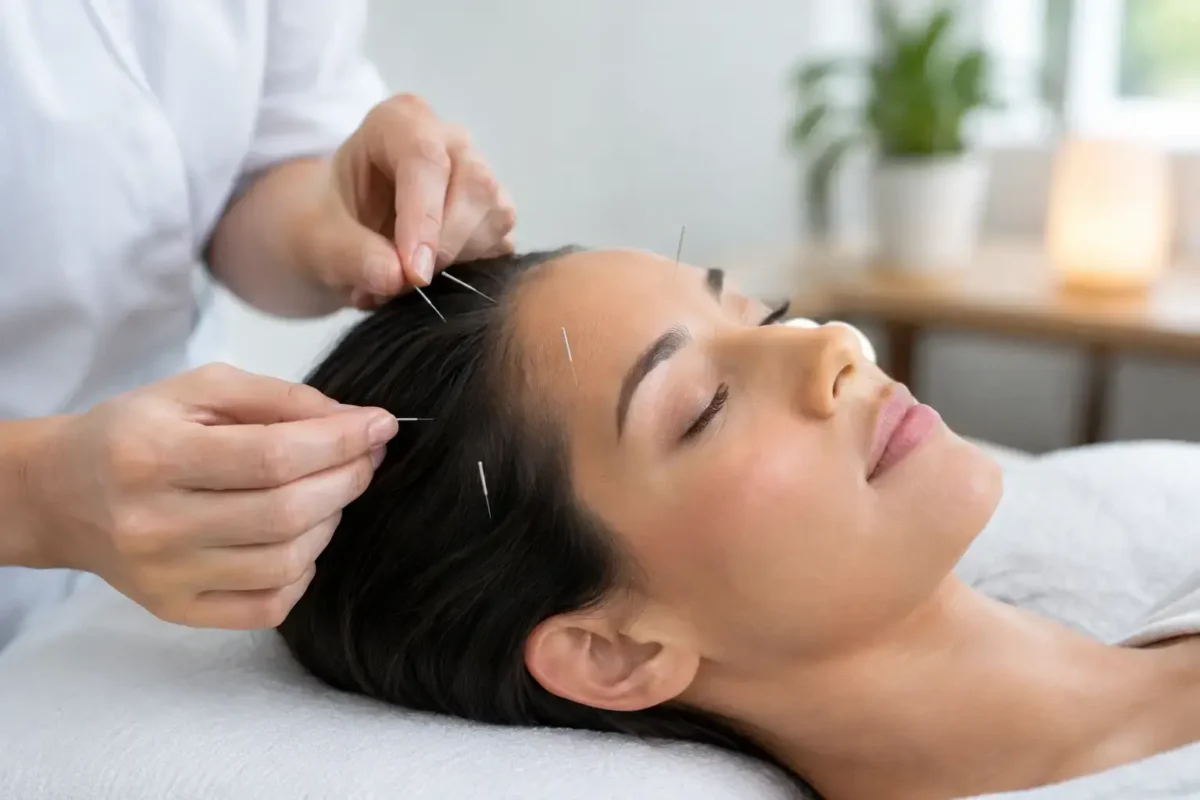
Treatment typically takes place in a comfortable position, lying down or seated. The needles are much thinner than injection needles. You may feel a brief pinch, pressure, warmth, heaviness, or a mild ache around a point, but treatment should not be sharply painful. Needles are usually left in place for a short period while you rest.
Your provider may use points on the head, arms, hands, legs, or upper back depending on your presentation. Needling directly in the area of pain is not always necessary. Treatment selection is based on the whole clinical picture, not a one-size-fits-all point prescription.
Afterward, some people feel relaxed or slightly tired. Others notice no immediate change, especially after the first visit. Mild temporary soreness or a small bruise can occur. Your clinician should explain what is normal to expect and when to contact them with questions.
How many sessions are usually needed?
Response varies. A short course may involve weekly sessions for several weeks, followed by a review of changes in migraine days, symptom severity, medication use, neck discomfort, sleep, and functional limitations. Tracking these details in a simple headache diary can make progress easier to measure.
A useful treatment plan has clear reassessment points. If you are improving, the frequency of care may gradually decrease while you continue with home strategies. If there is little meaningful change after an appropriate trial, your provider should revisit the working diagnosis, adjust the approach, or recommend further medical follow-up.
Be cautious of anyone who guarantees that acupuncture will eliminate migraines permanently. Good care is transparent about uncertainty and focused on measurable outcomes: fewer migraine days, lower intensity, shorter recovery time, less reliance on rescue medication, or better ability to work and participate in daily life.
Safety considerations and when to seek medical care
When performed by a qualified, regulated practitioner using sterile single-use needles, acupuncture is generally considered safe. Still, your provider needs to know about blood-thinning medication, bleeding disorders, pregnancy, implanted electrical devices, immune conditions, allergies, and any history of fainting with needles.
Not every severe headache should be managed with acupuncture. Seek urgent medical assessment for a sudden, explosive headache that reaches maximum intensity quickly, a new headache after a significant head injury, headache with fever and stiff neck, new weakness or numbness, trouble speaking, confusion, fainting, seizure, vision loss, or a major change from your usual migraine pattern. New or worsening headaches after age 50 also deserve medical evaluation.
If migraines have become frequent, medication overuse can also be part of the picture. Using certain pain relievers or migraine medications too often may contribute to more headache days. A physician, nurse practitioner, or pharmacist can help you review this safely.
Supporting treatment between appointments
Acupuncture tends to work best when it is supported by practical habits that match your triggers and physical needs. Regular meals, adequate hydration, consistent sleep timing, and gradual physical activity can be helpful for many people, although individual triggers differ. Skipping meals may matter greatly for one person, while screen exposure, shift work, hormonal changes, or prolonged neck positions may be more relevant for another.
For patients with neck pain, desk-related tension, or reduced mobility, targeted physiotherapy can add an important functional component. This may include hands-on care, strengthening, mobility work, and guidance on work setup or movement breaks. At Churchill Physiotherapy Clinic, care can be coordinated across disciplines when migraines overlap with musculoskeletal pain, dizziness, injury recovery, or other rehabilitation needs.
Avoid trying to change everything at once. Choose one or two realistic actions, such as keeping a consistent wake time or taking brief movement breaks during computer work, then monitor whether those changes affect your symptoms. Sustainable progress is more useful than an overly strict routine that is difficult to maintain.
Choosing acupuncture care with confidence
Look for a practitioner who takes a full health history, explains their findings clearly, uses sterile single-use needles, and welcomes communication with your primary care provider when needed. You should feel comfortable asking about expected benefits, possible side effects, session frequency, fees, and insurance coverage.
The right plan should respect both your symptoms and your life. If migraines are taking time away from work, family, exercise, or rest, a thoughtful assessment can help you move beyond simply pushing through each attack and toward care that supports better comfort, function, and confidence day to day.