

How to Restore Ankle Mobility After Injury
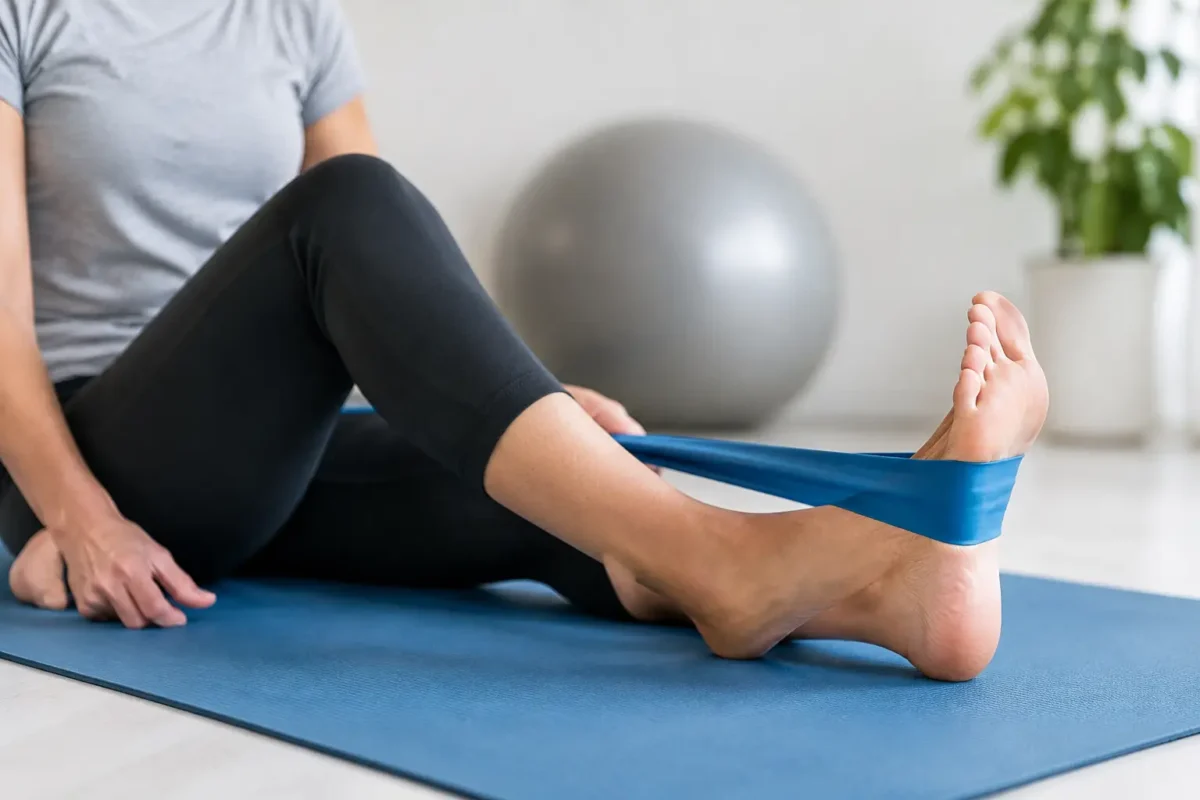
A stiff ankle can change far more than your walking pattern. It can make stairs uncomfortable, limit a squat at the gym, affect balance on uneven ground, and cause you to shift weight away from one side. Knowing how to restore ankle mobility starts with identifying why the joint has become restricted, then rebuilding movement without forcing painful range.
Ankle mobility is not simply about flexibility. It depends on the way the ankle joint moves, the condition of the surrounding muscles and tendons, swelling levels, balance, and the strength to control motion. A useful recovery plan should address each of these factors at the right stage of healing.
Why ankle mobility becomes limited
Stiffness commonly develops after an ankle sprain, fracture, surgery, prolonged boot use, or a period of reduced activity. Even when pain settles, the ankle may not automatically return to its previous range. Swelling can remain inside the joint, scar tissue may limit movement, and the calf muscles can become shorter or weaker when you avoid loading the leg normally.
The movement most often affected is dorsiflexion – the ability to bring the knee forward over the toes while keeping the heel on the floor. This motion is needed for walking, climbing stairs, getting out of a chair, squatting, and absorbing force when you land. When it is limited, the body often compensates by turning the foot outward, lifting the heel early, or placing extra strain on the knee, hip, or other ankle.
Not every stiff ankle should be treated in the same way. A recent injury with swelling and tenderness needs a different approach than long-standing restriction after an old sprain. If there was a fracture, surgical repair, or a significant tendon injury, follow the loading restrictions provided by your surgeon or treating clinician before starting mobility work.
How to restore ankle mobility safely
The goal is not to push through sharp pain. Mild stretching discomfort or temporary muscular fatigue can be expected, but increasing pain, swelling, catching, or a sense that the ankle is giving way are signs to reduce the activity and seek assessment.
Start by settling pain and swelling
If the ankle is still irritated, repeated aggressive stretching can prolong symptoms. Elevating the ankle when resting, using compression if appropriate for you, and gently moving the toes and ankle can help manage swelling. Short, frequent bouts of comfortable movement are usually more helpful than one long session.
Try ankle pumps while sitting or lying down: point the foot away, then pull the toes toward your shin. Move slowly through a comfortable range for one to two minutes. Ankle circles in both directions can also help maintain motion. These exercises are particularly useful after sitting at a desk, driving, or wearing a supportive boot.
Restore forward ankle movement
A simple knee-to-wall exercise targets dorsiflexion in a weight-bearing position. Stand facing a wall with the affected foot flat on the floor. Keeping the heel down and the knee aligned over the second toe, gently move the knee toward the wall. Step the foot closer or farther away so you can work without pain or the heel lifting.
Pause briefly at the end of the movement, then return to the start. Begin with two sets of eight to 12 controlled repetitions. The aim is smooth movement, not forcing the knee as far forward as possible. If the ankle pinches sharply at the front, reduce the range and have the joint assessed, especially if the problem persists.
A calf stretch may also be appropriate when tightness is contributing to limited movement. With both hands on a wall, keep the affected leg behind you and the heel down. Keep the back knee straight to emphasize the larger calf muscle, then slightly bend it to target the deeper soleus muscle. Hold a comfortable stretch for 20 to 30 seconds, repeating two or three times. Stretching can help, but it is rarely enough on its own after an injury.
Build strength around the joint
Mobility is more likely to stay improved when the ankle can control the new range. Calf raises are a practical starting point. Hold a stable counter or wall, rise onto the balls of both feet, pause, and lower slowly. Once this is comfortable, gradually place more weight through the recovering side before progressing to single-leg raises.
Resistance-band movements can strengthen the muscles that point the foot down, pull it up, and guide it inward and outward. These directions matter after a sprain because weakness in the outer ankle muscles may contribute to repeated rolling or instability. Use controlled repetitions rather than a heavy band that causes compensation through the knee or hip.
Balance training belongs in ankle rehabilitation, not just athletic training. Begin by standing near a counter with your feet together, then progress to single-leg standing on the affected side. The ankle, foot, and hip work together to keep you steady. Better balance can improve confidence on stairs, slippery surfaces, curbs, and uneven trails.
Return to the movements you need
Recovery should reflect your daily life. A person returning to warehouse work may need to practise controlled stepping, carrying, and prolonged standing. Someone returning to running needs sufficient calf strength, landing control, and gradual exposure to impact. An older adult may need to focus on gait, stair confidence, and fall prevention.
A useful sign of progress is not only gaining a few more degrees of motion. It is being able to walk with less limping, descend stairs with better control, or squat without the heel lifting. If an exercise worsens symptoms later that day or the following morning, reduce the volume or range before building back up.
Common mistakes that slow ankle recovery
Many people wait until the ankle feels completely pain-free before moving it. Others try to stretch intensely too early. Both approaches can create problems. Too little movement can increase stiffness and weakness, while too much too soon can irritate healing tissue.
Another common mistake is treating the ankle in isolation. Tightness in the calf, reduced foot strength, poor balance, and altered hip control can all affect how the ankle moves during walking and exercise. This is why a rehabilitation plan often includes more than a few ankle stretches.
Returning to sport or high-impact work based only on time since injury can also be misleading. Healing timelines vary. The ankle should be able to tolerate the specific demands you are returning to, including hopping, direction changes, lifting, or extended walking when those activities are relevant.
When ankle stiffness needs professional assessment
An assessment is recommended if ankle motion is not improving after a few weeks, if you continue to limp, or if stiffness repeatedly returns when activity increases. Persistent swelling, instability, numbness, pain at rest, locking, or pain that feels deep inside the joint should also be evaluated.
Seek urgent medical care after a new injury if you cannot bear weight, there is obvious deformity, severe swelling, increasing redness or warmth, fever, or changes in foot colour or sensation. These symptoms require more than a home exercise plan.
A physiotherapist can assess joint motion, swelling, strength, walking mechanics, balance, and the tissues that may be limiting recovery. Treatment may include hands-on joint and soft-tissue techniques, individually progressed exercise, taping or bracing guidance, and a practical plan for returning to work, sport, or daily activity. At Churchill Physiotherapy Clinic, care is tailored to the stage of your injury and the movements that matter most to you.
Give your ankle time to relearn movement
The most effective approach is consistent, comfortable practice rather than occasional hard sessions. Track a meaningful measure, such as how far your knee reaches toward the wall, how long you can balance, or whether stairs feel easier each week. Small changes add up when they are matched to the right level of loading.
An ankle that moves well should also feel dependable. With a gradual plan and appropriate clinical guidance when needed, you can rebuild the mobility, strength, and confidence required to move through daily life with greater comfort.