

A Work Injury Rehab Success Story, Step by Step
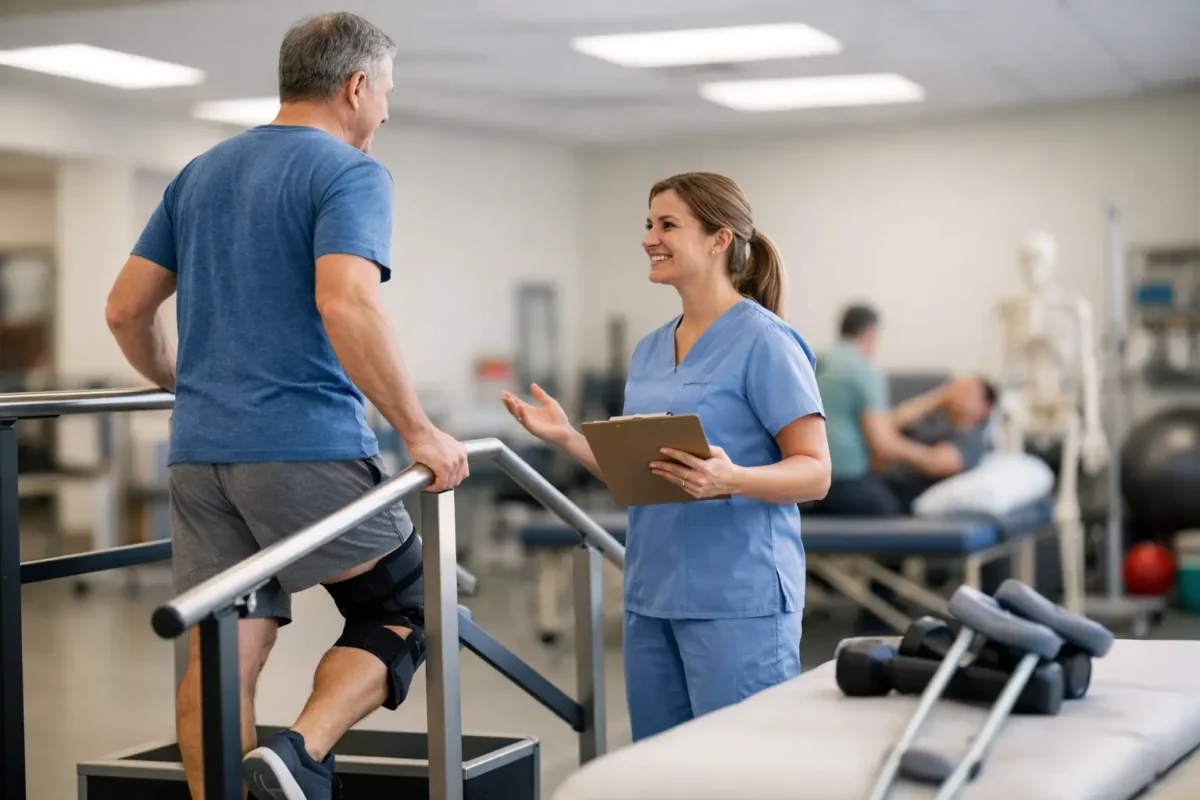
A work injury rehab success story rarely begins with a dramatic breakthrough. More often, it starts with a worker who cannot complete a normal shift, is worried about making the injury worse, and needs a clear plan for getting moving safely again. Progress comes from understanding the injury, treating the factors limiting function, and rebuilding the confidence needed for real work demands.
Consider a common clinical scenario: a warehouse employee develops low back pain after repeated lifting and twisting during a busy shift. The pain may not seem severe at first. By the next morning, however, bending to put on shoes is difficult, getting in and out of the car hurts, and the thought of lifting boxes feels impossible. The worker may be concerned about lost income, modified duties, a WSIB claim, or whether pain means further damage.
A successful recovery is not measured only by a lower pain score. It is measured by meaningful gains: standing through a shift with less discomfort, lifting with better control, moving without fear, and returning to regular responsibilities at an appropriate pace.
What a Work Injury Rehab Success Story Can Look Like
In this example, the first physiotherapy appointment focuses on more than the painful area. A thorough assessment considers how the injury happened, which movements provoke symptoms, the worker’s job tasks, current physical capacity, previous injuries, sleep, and recovery goals. A worker who regularly lifts from floor level needs a different plan than someone whose job involves prolonged driving, computer work, pushing equipment, or repetitive overhead reaching.
The assessment may find that the worker has limited hip movement, protective muscle tension through the low back, reduced trunk strength, and difficulty controlling a hip hinge when lifting. None of these findings should be treated as a permanent label. They are starting points for a personalized rehabilitation plan.
Early treatment often aims to reduce irritation and restore comfortable movement. Depending on the assessment, this can include hands-on physiotherapy, guided mobility work, education about pacing, and practical strategies for sitting, sleeping, getting out of a vehicle, or managing symptoms during the workday. The goal is not to tell someone to avoid all movement. Complete rest can lead to stiffness, loss of conditioning, and greater worry about activity. The safer approach is usually to find movements and loads the body can tolerate, then progress them carefully.
For this worker, an early success may be as simple as bending farther to reach the lower shelf at home or walking for 20 minutes without an increase in symptoms later that day. These changes matter because they show that the body can move again without automatically triggering a pain flare.
Recovery Must Match the Job, Not Just the Diagnosis
A diagnosis can provide useful direction, but it does not describe everything a worker needs to do. Someone may feel comfortable in the clinic yet still struggle with the speed, repetition, awkward positions, and fatigue of a full work shift. That is why workplace injury rehabilitation needs to be functional.
As symptoms settle, rehabilitation shifts toward controlled strength and work-specific movement. The warehouse employee may practise squatting, hip hinging, carrying, pushing, pulling, stepping, and lifting from different heights. The therapist watches not only the amount of weight lifted, but also breathing, technique, endurance, balance, and the person’s response afterward.
This is where a one-on-one approach is especially valuable. Generic exercises can be helpful, but they may not address the specific task that caused the problem. A worker who is expected to handle boxes from a pallet needs to build a different level of control than someone returning to a desk role after a neck injury. Similarly, an employee recovering from a shoulder strain may need to regain overhead reach and load tolerance, while a worker with a knee injury may need confidence with stairs, kneeling, and uneven surfaces.
Modified duties can be an important bridge rather than a setback. Temporary changes such as lighter loads, reduced repetition, more frequent position changes, or avoiding a high-risk task can allow the worker to stay engaged while capacity improves. The right modifications depend on the injury, the role, employer options, and the guidance of the treating team. They should be reviewed as function changes, not left in place indefinitely without a plan.
The Turning Point Is Often Confidence Under Load
Around the middle of rehabilitation, many people notice a change that is difficult to measure on a treatment table. They stop bracing for every movement. They begin to trust their body again.
For the warehouse employee, that turning point may come during a supervised lifting progression. At first, lifting a light box from knee height feels guarded and uncomfortable. Over several sessions, technique improves, the load increases gradually, and recovery after practice becomes more predictable. The worker learns how to position the body, use the legs and hips effectively, and recognize the difference between normal effort and symptoms that need adjustment.
Pain does not always disappear in a straight line. A demanding shift, poor sleep, an unexpected household task, or a quick increase in activity can cause a temporary flare. This does not automatically mean rehabilitation has failed or that the injury has returned to the beginning. A good plan accounts for these variations. The worker learns how to reduce load for a short period, use the strategies that have helped, and resume progress without panic.
That perspective is clinically important. Fear of reinjury can become as limiting as the original pain. Education, graded exposure to work tasks, and repeated positive movement experiences help replace avoidance with confidence. The aim is not reckless pushing through pain. It is a measured return to the activities that matter.
What Makes Progress Sustainable
A strong outcome includes a plan for the period after formal treatment. Once a worker returns to regular duties, they may still benefit from a short home exercise routine that maintains mobility, strength, and lifting control. The routine should be realistic. A program that takes 45 minutes every day may not be practical for someone managing long shifts, commuting, and family responsibilities. Often, a few targeted exercises performed consistently are more useful than an ambitious plan that is abandoned after one week.
Work habits also matter. That may mean setting up a workstation differently, alternating tasks where possible, using equipment correctly, taking movement breaks, or asking for help with an unusually heavy or awkward load. Not every workplace can eliminate physical demands, and not every injury can be prevented. Still, small adjustments can reduce unnecessary strain and support long-term function.
For some workers, recovery also benefits from coordinated care. Massage therapy may help address muscle tension that limits comfortable movement. Acupuncture, chiropractic care, osteopathy, or other clinically appropriate services may be considered within an individualized treatment plan. The best choice depends on the condition, examination findings, personal preferences, and response to treatment. No single therapy is the answer for every workplace injury.
Building Your Own Work Injury Rehab Success Story
The most encouraging part of a work injury rehab success story is that it is built through practical milestones, not wishful thinking. A worker may begin by needing help with basic daily tasks and later return to lifting, driving, climbing, reaching, or standing with greater control. Each stage should be based on current ability, not pressure to meet someone else’s timeline.
If a workplace injury is affecting your ability to work or manage daily life, early assessment can provide direction. Churchill Physiotherapy Clinic offers individualized rehabilitation focused on pain relief, safe movement, strength, and a return to the activities your job requires. With the right support, the next meaningful improvement may be closer than it feels today.