

How to Ease Hip Stiffness and Move More Freely

September 9, 2026
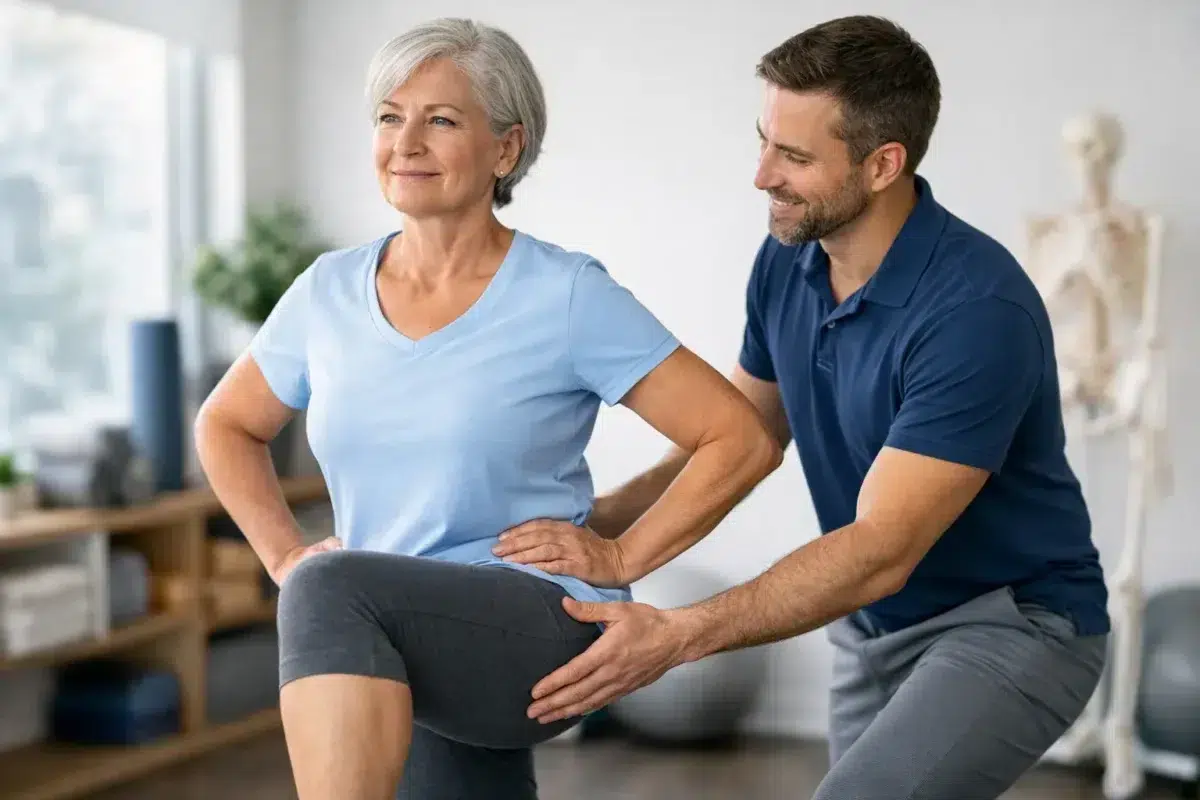
how-to-ease-hip-stiffness-and-move-more-freely-featured-1200x800.webp

Hip stiffness has a way of showing up at inconvenient moments: when you stand after a long meeting, get out of the car, climb stairs, or try to return to a favourite walk or workout. Learning how to ease hip stiffness starts with understanding why your hip feels restricted and choosing movement that helps rather than aggravates it.

For many people, stiffness is not a sign that they need to stop moving completely. It is often a sign that the hip and the surrounding muscles need the right amount of mobility, strength, and recovery. The best approach depends on whether the stiffness began recently, followed an injury, or has gradually become part of daily life.

Why hips become stiff

The hip is a deep ball-and-socket joint supported by strong muscles around the pelvis, lower back, thigh, and core. When any part of this system is irritated, weak, overworked, or inactive for long periods, the hip may feel tight, achy, or difficult to move.

Long periods of sitting are a common contributor. Desk work, driving, and time on the couch can leave the hip flexors at the front of the hip in a shortened position. Sitting alone is not necessarily harmful, but staying in one position for hours can make the first few steps after standing feel uncomfortable.

Stiffness can also follow a change in activity. Perhaps you have increased your walking distance, started a new fitness class, returned to work after time away, or spent a weekend lifting and carrying. In these situations, the hip may be responding to more load than it is currently prepared to handle.

Other possible contributors include osteoarthritis, tendon irritation, bursitis, lower back conditions, muscle strains, previous surgery, and altered movement after a car accident or workplace injury. Pain in the hip is not always coming from the hip itself. The lower back, sacroiliac joint, knee, or pelvic floor can influence how the hip moves and feels.

How to ease hip stiffness safely at home

Gentle, regular movement is usually more useful than one intense stretching session. The goal is to help the joint move comfortably, improve circulation to the area, and gradually restore confidence in everyday activities.

Break up long periods of sitting

If you work at a computer or drive regularly, aim to change position every 30 to 60 minutes. Stand up, take a brief walk, or gently shift your weight from one leg to the other. A short movement break may seem minor, but repeated throughout the day, it can reduce the stiffness that builds when the hips stay still.

When sitting, keep both feet supported where possible and avoid staying twisted or leaning to one side for extended periods. If getting up from a low chair is difficult, a firmer or slightly higher seat may be more comfortable while you recover.

Start with controlled hip mobility

Choose movements that feel easy and smooth rather than forcing a deep stretch. Lying on your back with knees bent, gently rock both knees from side to side within a comfortable range. You can also bring one knee slowly toward your chest, then lower it with control. These motions can be useful first thing in the morning or after sitting.

A standing hip extension is another practical option. Hold a counter for balance, keep your trunk upright, and move one leg slightly behind you without arching your lower back. The movement should come from the hip, not from pushing into pain.

If you feel a mild stretch or muscular effort that settles quickly, that is often acceptable. Sharp pain, catching, sudden weakness, numbness, or symptoms that worsen for hours afterward are signs to stop and seek clinical advice.

Add strength, not just stretching

A stiff hip is not always a short or inflexible hip. Sometimes the body creates a feeling of tightness because the muscles around the joint are not providing enough support. Strengthening the glutes, thighs, and trunk can improve how the hip handles walking, stairs, lifting, and exercise.

Begin with low-load exercises such as a bridge, sit-to-stand from a supportive chair, or side-lying leg lift. Quality matters more than repetition count. Move slowly, keep your pelvis as level as you can, and work within a range that does not increase joint pain.

For someone with arthritis or persistent pain, strength work may need to start with a smaller range or fewer repetitions. For an active runner or gym-goer, the focus may be on gradually rebuilding single-leg control and tolerance to training. This is why a personalized plan is more effective than copying a generic hip routine online.

Use heat or cold based on your symptoms

Heat can be comforting when your hip feels generally stiff, guarded, or sore after inactivity. A warm shower, heating pad, or warm compress for a short period may make it easier to move before gentle exercise. Protect your skin and avoid falling asleep with a heating pad on.

Cold may be more helpful if the area feels hot, swollen, or irritated after a recent flare-up or activity. Use a wrapped cold pack for short intervals rather than placing ice directly on the skin. Neither heat nor cold fixes the underlying cause, but either can make movement more manageable.

Adjust activity without becoming inactive

Trying to push through severe pain can prolong irritation, but avoiding all activity can lead to more weakness and stiffness. A better middle ground is to modify the activity that is provoking symptoms.

For example, shorten your walks temporarily rather than stopping them altogether, choose flatter routes, take stairs one at a time if needed, or reduce the depth of squats at the gym. If cycling feels more comfortable than walking, it may be a useful short-term option. The right choice depends on your symptoms, fitness level, and the reason the hip became stiff.

Everyday habits that support hip mobility

Your hip does not move in isolation. Footwear, sleep positions, work setup, stress, and general activity levels can all affect how your body loads the joint.

Supportive shoes may help if you spend long hours standing or walking, particularly if foot mechanics are contributing to discomfort higher up the leg. A physiotherapy assessment can determine whether custom orthotics are appropriate, rather than assuming they are needed for every hip problem.

At night, some people are more comfortable with a pillow between the knees when lying on their side. This can reduce pressure on the outer hip and keep the pelvis in a more neutral position. If lying on one side causes significant pain, change sides or try lying on your back with a pillow under the knees.

Stress and poor sleep can also amplify pain sensitivity and muscle tension. That does not mean the pain is imagined. It means recovery may improve when your treatment plan includes realistic sleep, pacing, and movement strategies alongside hands-on care or exercise.

When hip stiffness needs professional assessment

A clinical assessment is particularly valuable when stiffness lasts more than a few weeks, keeps returning, limits work or sleep, or changes the way you walk. Physiotherapy can identify whether the main issue is joint mobility, muscle weakness, tendon loading, lower back involvement, balance, or a combination of factors.

At Churchill Physiotherapy Clinic, treatment plans are built around your symptoms and goals, whether that means getting through a workday more comfortably, returning to the gym, walking without a limp, or recovering after an accident. Hands-on treatment, targeted exercise, education, and coordinated care can be used where appropriate to help restore movement safely.

Seek prompt medical attention if hip pain follows a significant fall or accident, if you cannot bear weight, or if the hip is visibly swollen, red, hot, or severely painful. Fever, unexplained weight loss, new numbness, loss of bowel or bladder control, or pain that is severe at rest also require urgent assessment.

Give your hip a consistent, realistic plan

Lasting improvement usually comes from small actions repeated over time: getting up regularly, moving the hip comfortably, building strength gradually, and adjusting activities before symptoms become overwhelming. There is no single stretch that works for every stiff hip, and forcing mobility can be counterproductive.

Pay attention to what makes your hip feel better during the day and what reliably causes it to flare. With the right guidance and a plan that fits your body and routine, each comfortable step can become part of getting back to the activities that matter to you.

How to Ease Hip Stiffness and Move More Freely
September 9, 2026
how-to-ease-hip-stiffness-and-move-more-freely-featured-1200x800.webp

Hip stiffness has a way of showing up at inconvenient moments: when you stand after a long meeting, get out of the car, climb stairs, or try to return to a favourite walk or workout. Learning how to ease hip stiffness starts with understanding why your hip feels restricted and choosing movement that helps rather than aggravates it.

For many people, stiffness is not a sign that they need to stop moving completely. It is often a sign that the hip and the surrounding muscles need the right amount of mobility, strength, and recovery. The best approach depends on whether the stiffness began recently, followed an injury, or has gradually become part of daily life.

Why hips become stiff

The hip is a deep ball-and-socket joint supported by strong muscles around the pelvis, lower back, thigh, and core. When any part of this system is irritated, weak, overworked, or inactive for long periods, the hip may feel tight, achy, or difficult to move.

Long periods of sitting are a common contributor. Desk work, driving, and time on the couch can leave the hip flexors at the front of the hip in a shortened position. Sitting alone is not necessarily harmful, but staying in one position for hours can make the first few steps after standing feel uncomfortable.

Stiffness can also follow a change in activity. Perhaps you have increased your walking distance, started a new fitness class, returned to work after time away, or spent a weekend lifting and carrying. In these situations, the hip may be responding to more load than it is currently prepared to handle.

Other possible contributors include osteoarthritis, tendon irritation, bursitis, lower back conditions, muscle strains, previous surgery, and altered movement after a car accident or workplace injury. Pain in the hip is not always coming from the hip itself. The lower back, sacroiliac joint, knee, or pelvic floor can influence how the hip moves and feels.

How to ease hip stiffness safely at home

Gentle, regular movement is usually more useful than one intense stretching session. The goal is to help the joint move comfortably, improve circulation to the area, and gradually restore confidence in everyday activities.

Break up long periods of sitting

If you work at a computer or drive regularly, aim to change position every 30 to 60 minutes. Stand up, take a brief walk, or gently shift your weight from one leg to the other. A short movement break may seem minor, but repeated throughout the day, it can reduce the stiffness that builds when the hips stay still.

When sitting, keep both feet supported where possible and avoid staying twisted or leaning to one side for extended periods. If getting up from a low chair is difficult, a firmer or slightly higher seat may be more comfortable while you recover.

Start with controlled hip mobility

Choose movements that feel easy and smooth rather than forcing a deep stretch. Lying on your back with knees bent, gently rock both knees from side to side within a comfortable range. You can also bring one knee slowly toward your chest, then lower it with control. These motions can be useful first thing in the morning or after sitting.

A standing hip extension is another practical option. Hold a counter for balance, keep your trunk upright, and move one leg slightly behind you without arching your lower back. The movement should come from the hip, not from pushing into pain.

If you feel a mild stretch or muscular effort that settles quickly, that is often acceptable. Sharp pain, catching, sudden weakness, numbness, or symptoms that worsen for hours afterward are signs to stop and seek clinical advice.

Add strength, not just stretching

A stiff hip is not always a short or inflexible hip. Sometimes the body creates a feeling of tightness because the muscles around the joint are not providing enough support. Strengthening the glutes, thighs, and trunk can improve how the hip handles walking, stairs, lifting, and exercise.

Begin with low-load exercises such as a bridge, sit-to-stand from a supportive chair, or side-lying leg lift. Quality matters more than repetition count. Move slowly, keep your pelvis as level as you can, and work within a range that does not increase joint pain.

For someone with arthritis or persistent pain, strength work may need to start with a smaller range or fewer repetitions. For an active runner or gym-goer, the focus may be on gradually rebuilding single-leg control and tolerance to training. This is why a personalized plan is more effective than copying a generic hip routine online.

Use heat or cold based on your symptoms

Heat can be comforting when your hip feels generally stiff, guarded, or sore after inactivity. A warm shower, heating pad, or warm compress for a short period may make it easier to move before gentle exercise. Protect your skin and avoid falling asleep with a heating pad on.

Cold may be more helpful if the area feels hot, swollen, or irritated after a recent flare-up or activity. Use a wrapped cold pack for short intervals rather than placing ice directly on the skin. Neither heat nor cold fixes the underlying cause, but either can make movement more manageable.

Adjust activity without becoming inactive

Trying to push through severe pain can prolong irritation, but avoiding all activity can lead to more weakness and stiffness. A better middle ground is to modify the activity that is provoking symptoms.

For example, shorten your walks temporarily rather than stopping them altogether, choose flatter routes, take stairs one at a time if needed, or reduce the depth of squats at the gym. If cycling feels more comfortable than walking, it may be a useful short-term option. The right choice depends on your symptoms, fitness level, and the reason the hip became stiff.

Everyday habits that support hip mobility

Your hip does not move in isolation. Footwear, sleep positions, work setup, stress, and general activity levels can all affect how your body loads the joint.

Supportive shoes may help if you spend long hours standing or walking, particularly if foot mechanics are contributing to discomfort higher up the leg. A physiotherapy assessment can determine whether custom orthotics are appropriate, rather than assuming they are needed for every hip problem.

At night, some people are more comfortable with a pillow between the knees when lying on their side. This can reduce pressure on the outer hip and keep the pelvis in a more neutral position. If lying on one side causes significant pain, change sides or try lying on your back with a pillow under the knees.

Stress and poor sleep can also amplify pain sensitivity and muscle tension. That does not mean the pain is imagined. It means recovery may improve when your treatment plan includes realistic sleep, pacing, and movement strategies alongside hands-on care or exercise.

When hip stiffness needs professional assessment

A clinical assessment is particularly valuable when stiffness lasts more than a few weeks, keeps returning, limits work or sleep, or changes the way you walk. Physiotherapy can identify whether the main issue is joint mobility, muscle weakness, tendon loading, lower back involvement, balance, or a combination of factors.

At Churchill Physiotherapy Clinic, treatment plans are built around your symptoms and goals, whether that means getting through a workday more comfortably, returning to the gym, walking without a limp, or recovering after an accident. Hands-on treatment, targeted exercise, education, and coordinated care can be used where appropriate to help restore movement safely.

Seek prompt medical attention if hip pain follows a significant fall or accident, if you cannot bear weight, or if the hip is visibly swollen, red, hot, or severely painful. Fever, unexplained weight loss, new numbness, loss of bowel or bladder control, or pain that is severe at rest also require urgent assessment.

Give your hip a consistent, realistic plan

Lasting improvement usually comes from small actions repeated over time: getting up regularly, moving the hip comfortably, building strength gradually, and adjusting activities before symptoms become overwhelming. There is no single stretch that works for every stiff hip, and forcing mobility can be counterproductive.

Pay attention to what makes your hip feel better during the day and what reliably causes it to flare. With the right guidance and a plan that fits your body and routine, each comfortable step can become part of getting back to the activities that matter to you.

Privacy Policy

We collect information that you voluntarily provide to us through responses to contact form, booking requests, and testimonial submissions.

This site is protected by reCAPTCHA and the Google Privacy Policy and Terms of Service apply.

Copyright by Churchill Physiotherapy Clinic Inc. Built by Enigmatic Studio.